Quick Summary: What happens when multiple AI agents work together without the right architecture? Explore the three major coordination patterns, compare leading frameworks, and understand how to prevent agent loops, conflicting outputs, rising costs, and production failures.
Adding more AI agents does not automatically make an AI system smarter. In fact, without the right architecture, multiple agents can create conflicting decisions, repeated tasks, rising costs, and workflows that are difficult to control.
As enterprises move beyond standalone AI assistants, multi-agent systems architecture is becoming an important consideration for building autonomous business operations. But there is a critical decision to make: should one agent orchestrate the entire workflow, should a supervisor manage specialist agents, or should multiple agents collaborate through a swarm?
Each approach offers a different balance of control, flexibility, scalability, and cost. The challenge is knowing which one fits your business requirements. Understanding these differences is the first step toward building reliable AI systems that deliver measurable results.
1. What Is Multi-Agent Systems Architecture?
Multi-agent systems architecture defines how multiple AI agents are designed, connected, and coordinated to complete a shared business objective. Each agent performs a specific role, uses designated tools and information, and communicates with other agents to complete tasks.
Unlike a standalone AI assistant, which generally manages a task using one reasoning process and its available tools, a multi-agent system distributes responsibilities across specialized agents.
For example, consider an insurance company processing a new claim. Instead of asking one AI agent to handle everything, the system could assign separate responsibilities:
- Document agent: Extracts information from submitted documents.
- Validation agent: Checks policy details and identifies missing information.
- Risk assessment agent: Evaluates potential risks and inconsistencies.
- Decision support agent: Combines findings and prepares a recommendation.
- Human reviewer: Approves decisions that require professional judgment.
The agents work toward one outcome, but each operates within defined responsibilities and permissions.
How Does Single-Agent Architecture Differ From Multi-Agent Architecture?
The difference comes down to how responsibilities, decisions, and execution are distributed.
A single-agent architecture uses one agent to interpret instructions, access tools, retrieve information, and complete a task. A multi-agent architecture divides a larger task into smaller responsibilities handled by multiple specialized agents.
When Should You Move From a Single-Agent to a Multi-Agent System?
Consider a multi-agent approach when:
- A task requires multiple areas of specialized knowledge.
- Independent activities can run simultaneously.
- Different agents need different tools or access permissions.
- One agent struggles with complex instructions or excessive context.
- Workflows require separate validation and approval stages.
However, adding agents simply to make an architecture appear more advanced is rarely a good engineering decision. Microsoft's AI Agent Orchestration Patterns recommends starting with the lowest level of complexity that reliably meets the workload requirements.
What Are the Core Components of a Multi-Agent System?
A reliable architecture requires more than multiple AI models communicating with each other. It needs a defined execution structure.
The core components include:
- AI models: Power the reasoning and decision-making capabilities of individual agents.
- Agent instructions: Define each agent's role, responsibilities, boundaries, and expected output.
- Tools and APIs: Allow agents to retrieve information or interact with business applications.
- Memory and shared state: Preserve relevant information across different tasks and interactions.
- Orchestration layer: Controls task assignment, execution order, communication, and completion.
- Monitoring and evaluation: Tracks agent behavior, output quality, errors, and resource consumption.
- Human oversight: Provides approval and intervention when decisions carry business or operational risks.
Understanding these components helps determine how agents should interact before choosing an architecture.
2. How Does AI Agent Orchestration Work?
AI agent orchestration coordinates how agents receive tasks, exchange information, execute responsibilities, and deliver results.
Think of it as managing a project team. One person may distribute assignments, another may supervise progress, and specialists may work independently on their assigned responsibilities. The final outcome depends on how effectively these activities are coordinated.
In an AI environment, orchestration manages the same process through instructions, model calls, APIs, shared state, and execution rules.
For organizations developing complex workflows, AI agent orchestration determines whether agents can work together reliably rather than simply producing individual outputs. Teams exploring multi-agent systems in the enterprise quickly find that orchestration quality, not model choice, decides production success.
What Are the Roles of Orchestrator, Supervisor, and Worker Agents?
Although the terminology varies across frameworks and implementations, these roles can be understood through their responsibilities.
Orchestrator agent
An orchestrator receives the initial request, breaks it into subtasks, selects suitable agents, and combines their outputs.
For example, in a healthcare appointment workflow, it could assign patient eligibility verification, appointment availability checks, and scheduling to separate agents before consolidating the results.
Its primary responsibility is task distribution and workflow coordination.
Supervisor agent
A supervisor manages specialist agents and evaluates their progress. It can review outputs, identify missing information, reassign tasks, request corrections, or stop execution when requirements are met.
For example, in a financial services workflow, a supervisor could review the results of document verification and fraud detection agents before allowing a case to proceed.
Its primary responsibility is execution oversight and quality control.
Worker agents
Worker agents perform specific tasks based on their assigned responsibilities.
Examples include:
- Retrieving customer information.
- Analyzing financial transactions.
- Extracting information from documents.
- Checking inventory availability.
- Generating reports.
- Validating application data.
A worker should not automatically have permission to perform every action available to the overall system. Its tools and access should match its assigned responsibilities.
How Do Agents Communicate, Share Memory, and Hand Off Tasks?
Agents generally exchange information through structured messages, shared state, or controlled handoffs.
Three technical elements determine how this communication works.
1. Agent messaging
Agents send structured information rather than relying entirely on unstructured conversations.
For example, a document-processing agent might return:
{
  "claim_id": "CLM-1045",
  "document_status": "verified",
  "missing_documents": [],
  "next_action": "risk_assessment"
}
The receiving agent can interpret the output and continue the workflow without having to reconstruct the entire conversation.
2. Shared state and memory
Shared state stores information that different agents need during a workflow. It may include customer details, task status, previous outputs, decisions, and execution history.
However, shared memory does not mean every agent should access all available information. Access should be restricted according to the agent's role and business requirements.
3. Agent handoff
An agent handoff transfers control from one agent to another when a task requires different expertise.
For example:
Customer request → Support agent → Billing agent → Payment verification agent → Final response.
Each handoff should include the required context, task status, and expected next action.
A poorly designed handoff can result in repeated work, missing information, or incorrect decisions. This makes message structure and state management important parts of architecture design.
3. Orchestrator vs. Supervisor vs. Swarm: Which Architecture Should You Choose?
The architecture you choose determines who controls execution, how agents collaborate, and how the system responds when something goes wrong.
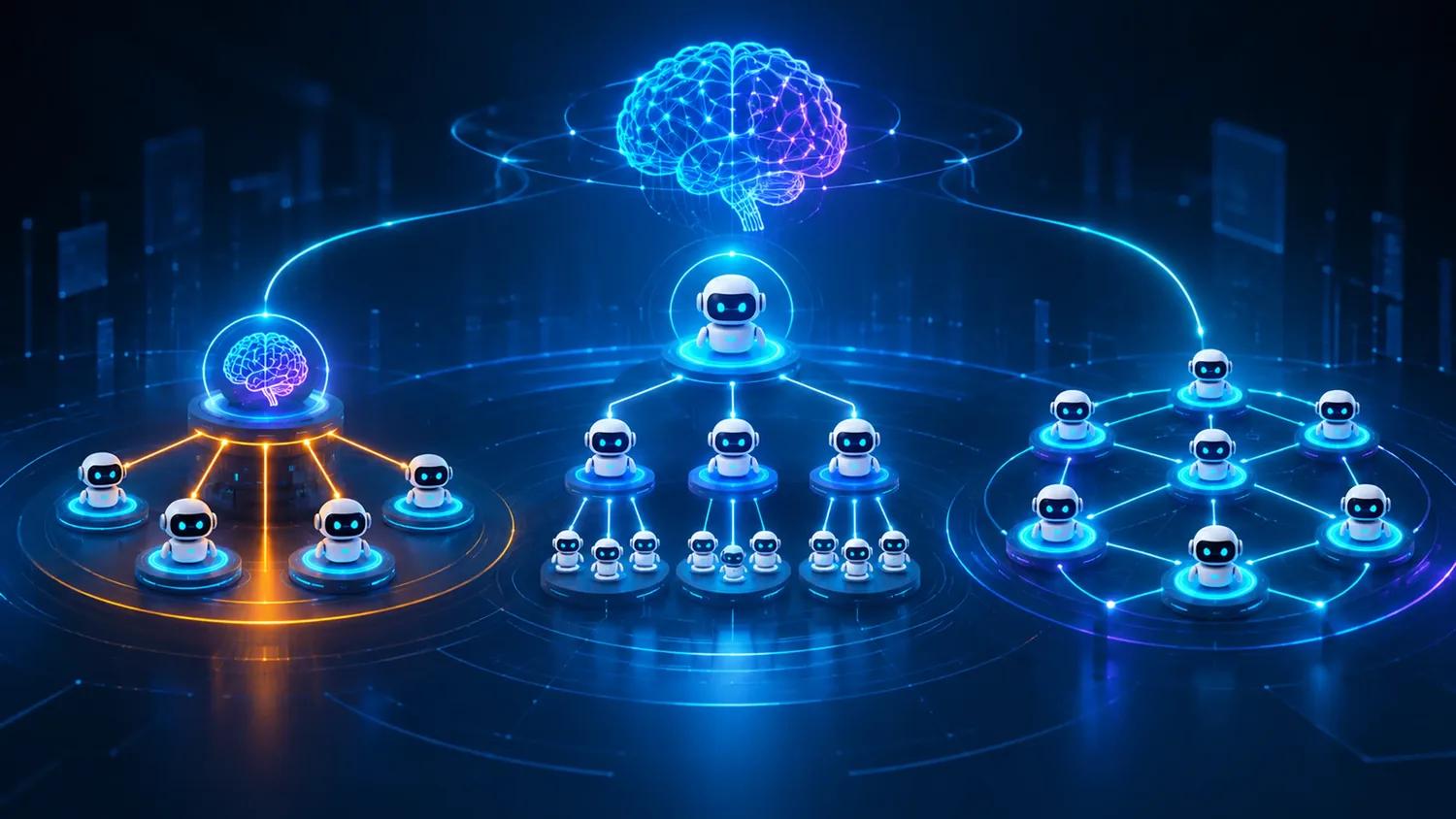
An orchestrator offers centralized task distribution, a supervisor adds ongoing oversight, and a swarm supports more distributed collaboration.
These are useful architectural patterns rather than universally standardized categories. In real implementations, an orchestrator may also supervise agents, while a swarm may include coordination rules or designated leadership.
How Does the Orchestrator Pattern Manage AI Workflows?
Best for predictable workflows
The orchestrator pattern uses a central coordinating agent to manage task execution.
It receives the request, determines which agents are required, assigns subtasks, and collects their results. The orchestrator maintains control over the overall workflow.
How does it work?
- A user submits a request.
- The orchestrator analyzes the requirements.
- It divides the task into smaller assignments.
- Specialist agents execute their respective tasks.
- The orchestrator collects and evaluates their outputs.
- It produces the final result or requests additional work.
Example: E-commerce order management
An order management system could use an orchestrator to coordinate inventory verification, payment confirmation, shipping calculations, and customer notifications.
The orchestrator ensures that the workflow follows the required sequence and that the final response reflects the status of each activity.
What should you watch out for?
A central orchestrator can become a bottleneck if every decision and interaction must pass through it. If it fails, the entire workflow may stop unless recovery mechanisms are available.
To reduce this risk, establish execution limits, retry policies, fallback routes, and persistent workflow state.
How Does the Supervisor Pattern Control Multiple Agents?
Best for controlled execution
The supervisor pattern introduces a management layer that monitors specialist agents, evaluates their outputs, and decides what should happen next.
Unlike a basic orchestrator that primarily distributes tasks, a supervisor can continuously review execution quality and redirect work when necessary.
How does it work?
- A supervisor receives the overall objective.
- It assigns tasks to specialist agents.
- Worker agents execute their responsibilities.
- The supervisor evaluates the returned results.
- It requests corrections, assigns additional work, or approves completion.
- The final output moves to the next workflow stage.
Example: Financial transaction monitoring
A financial institution could deploy separate agents for transaction analysis, customer verification, and suspicious activity detection.
The supervisor reviews their findings and determines whether the transaction can proceed, requires further investigation, or should be escalated to a human compliance officer.
What should you watch out for?
A supervisor that repeatedly requests revisions without clear completion criteria can create unnecessary model calls and execution loops.
Define measurable acceptance conditions, maximum review cycles, escalation rules, and clear authority for approving actions.
How Does an Agent Swarm Enable Distributed Collaboration?
Best for parallel exploration
An agent swarm consists of multiple agents that collaborate through distributed task execution, communication, and handoffs rather than relying on one permanent central controller.
Depending on the implementation, agents may independently select tasks, coordinate through shared protocols, or pass responsibilities to other agents.
How does it work?
- A complex objective is introduced.
- The system identifies independent areas of work.
- Multiple agents investigate or execute their assignments.
- Agents exchange findings and relevant information.
- A coordination mechanism consolidates the results.
- The system produces a combined outcome.
Example: Market intelligence
A business researching a new market could use separate agents to examine competitors, customer sentiment, pricing trends, and industry developments.
These agents can investigate different areas simultaneously, reducing dependence on a strictly sequential process.
However, distributed collaboration does not automatically guarantee consensus or accuracy. The architecture still needs conflict-resolution rules, shared objectives, and clear stopping conditions.
What should you watch out for?
Without sufficient coordination, agents may duplicate research, contradict each other, or consume resources without producing a useful result.
Establish communication protocols, task ownership, result validation, and execution limits before expanding the swarm.
How Do You Choose Between These Three Architectures?
There is no universally superior architecture. The right decision depends on workflow predictability, the degree of autonomy required, operational risk, and the cost of coordination.
A practical selection rule:
- Choose an orchestrator when tasks have defined steps and centralized coordination is sufficient.
- Choose a supervisor when execution requires continuous evaluation, corrections, and controlled delegation.
- Choose a swarm when tasks can be distributed across agents and independent collaboration adds measurable value.
For more complex enterprise workflows, combining these patterns may be more effective than forcing the entire system into one architecture.
Microsoft's agent orchestration guidance and Google's agentic AI design patterns provide useful implementation-level perspectives on selecting and combining coordination patterns.
4. How Do You Design a Scalable Multi-Agent Architecture?
Building a multi-agent system that works in a demonstration is different from developing one that can support thousands of business transactions.
A scalable architecture must account for agent responsibilities, model selection, communication protocols, memory management, execution limits, and integration with existing business applications.
The objective is not to increase the number of agents. It is to distribute work in a way that improves execution without introducing unnecessary complexity.
How Do You Choose the Right Agent Orchestration Framework?
An agent orchestration framework provides the building blocks for defining agents, assigning responsibilities, managing communication, and controlling workflow execution.
However, selecting a framework based only on popularity can create implementation challenges later. Evaluate the framework against your application requirements, programming environment, deployment infrastructure, and operational constraints.
Here are four frameworks and technologies worth evaluating:
1. LangGraph
Stateful workflows and controlled execution
LangGraph supports graph-based workflows in which nodes represent agents or operations and edges define how execution moves between them.
It is particularly useful when applications require persistent state, conditional routing, repeated execution, and human approval checkpoints.
Consider it when: You need explicit control over complex workflows, state transitions, and agent execution.
2. CrewAI
Role-based agent collaboration
CrewAI organizes agents around defined roles, goals, and responsibilities. It supports task delegation and collaboration between specialized agents.
For example, a business intelligence workflow could assign research, data analysis, and report preparation to separate agents.
Consider it when: You want to organize agents around business roles and clearly defined tasks.
3. Microsoft AutoGen
Multi-agent conversation and collaboration
Microsoft AutoGen provides capabilities for building applications in which agents interact, exchange information, and collaborate on complex tasks.
It is relevant when workflows require agent-to-agent conversations and coordinated problem-solving. Microsoft now also provides its Agent Framework for building agent and workflow applications, so new projects should evaluate the current framework direction rather than assume every older AutoGen implementation is the preferred starting point.
Consider it when: Your application requires conversational agent collaboration and you have evaluated the relevant framework version.
4. OpenAI Swarm
Experimental multi-agent handoffs
OpenAI Swarm demonstrates lightweight agent coordination through handoffs and shared context.
It is useful for understanding how agents can transfer control to one another based on task requirements. However, the original Swarm repository is experimental and educational, not a production-ready framework recommendation.
Consider it when: You want to explore agent handoffs and understand distributed agent interactions.
How should you evaluate these frameworks?
Before committing to a framework, compare:
- Workflow control and routing flexibility.
- Memory and state persistence.
- API and enterprise application integration.
- Human approval and access controls.
- Observability and debugging capabilities.
- Deployment options and infrastructure requirements.
- Model compatibility and operating costs.
The best framework is the one that meets your actual workload requirements, not necessarily the one with the largest developer community.
How Do You Manage Agent Memory and Context Sharing?
Memory management is one of the most important considerations in a multi-agent system because agents need relevant information to complete their responsibilities without repeatedly retrieving or processing the same data.
However, giving every agent access to the complete conversation history can increase token consumption, expose unnecessary information, and create confusion.
A better approach is to establish a structured memory architecture.
Consider three layers:
1. Working memory
Stores information required for the current task, such as the customer's request, task instructions, and intermediate results.
2. Shared workflow state
Maintains information that multiple agents need to access, including task progress, assigned responsibilities, execution status, and validated outputs.
3. Persistent memory
Stores relevant information across sessions, such as approved customer preferences, historical interactions, and reusable business knowledge, subject to retention and access policies.
For example, a customer support system should allow a billing agent to access relevant payment information without automatically exposing unrelated medical, financial, or personal records.
This requires more than a shared database. It requires clear data ownership, access policies, context selection, and mechanisms to prevent outdated information from influencing decisions. A reliable data foundation for agentic AI makes that possible.
How Do You Build a Multi-Agent Workflow for Enterprise Applications?
A scalable workflow should connect agents with the business applications and data sources they need to perform their responsibilities.
Consider an enterprise procurement process:
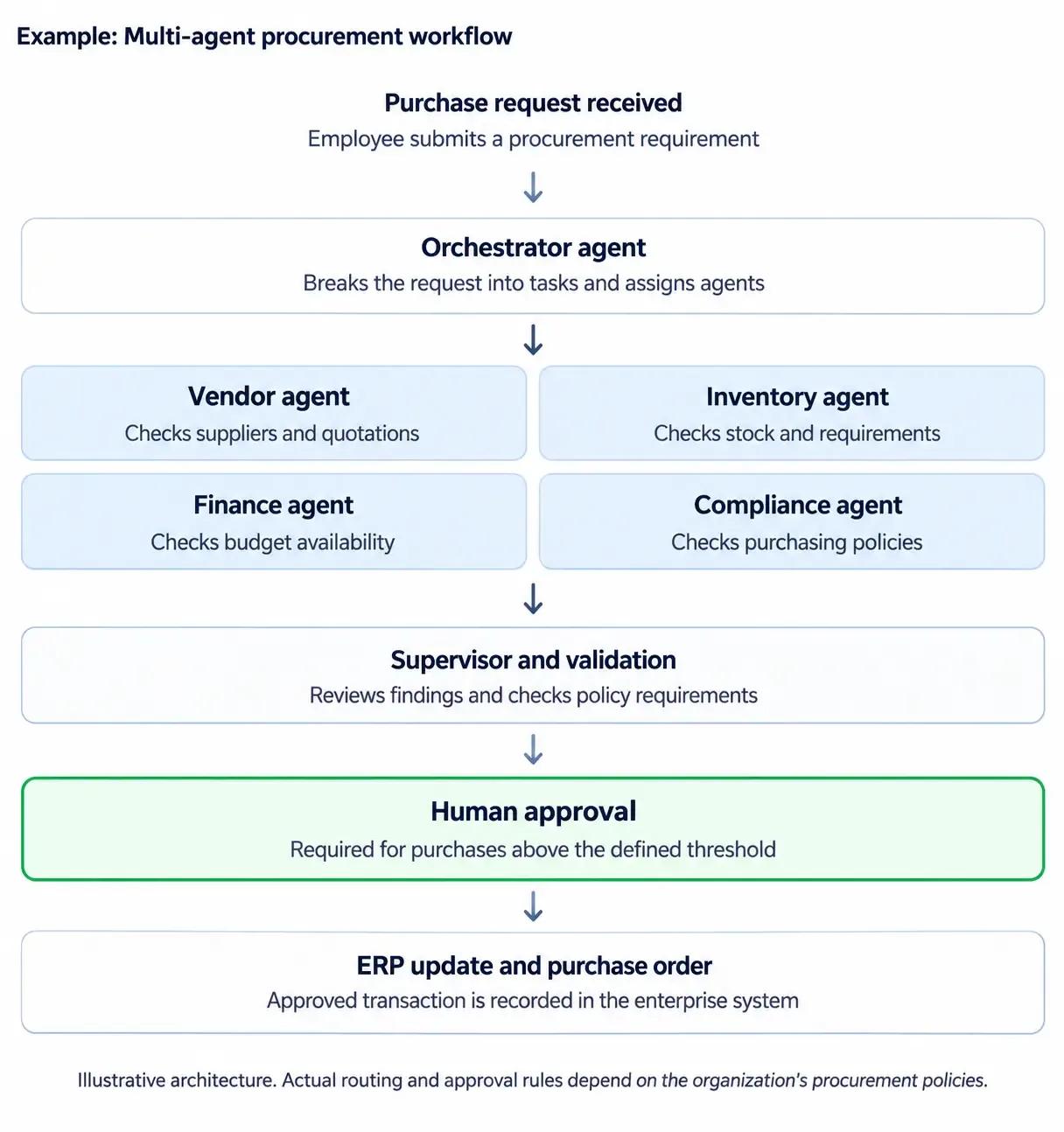
This workflow demonstrates how agents can work independently while remaining connected to one business objective.
For implementation, consider the following sequence:
- Map the existing business process and identify repetitive activities.
- Define which tasks require specialized agent capabilities.
- Select the orchestration pattern according to workflow dependencies.
- Connect agents with relevant APIs, databases, and enterprise applications.
- Establish shared state, access permissions, and handoff rules.
- Introduce validation and human approval checkpoints.
- Test the complete workflow before expanding deployment.
The most important decision is identifying which actions agents can perform independently and which require approval.
5. Why Do Multi-Agent LLM Systems Fail in Production?
A multi-agent system can produce convincing results during testing and still fail when exposed to real business conditions.
The reasons are often architectural rather than purely model-related. Agents may misunderstand responsibilities, lose context, repeat tasks, or produce conflicting outputs that the system cannot resolve.
The financial impact can also be significant.
In its published account of building a multi-agent research system, Anthropic reported that its multi-agent system used approximately 15 times more tokens than a standard chat interaction in its experiments.
This does not mean every enterprise multi-agent system will have the same cost multiplier. It demonstrates why architecture decisions must account for model usage and the business value of each completed task.
What Causes Agent Loops, Conflicting Outputs, and Context Loss?
Three common failure scenarios deserve particular attention.
1. Repeated agent loops
An agent may continuously request additional information, send work back to another agent, or repeat an operation without reaching a completion condition.
For example, a document verification agent may repeatedly request corrections from a document extraction agent because neither has a clearly defined acceptance threshold.
How to prevent it:
- Set maximum execution and retry limits.
- Define clear task completion criteria.
- Establish escalation rules.
- Track repeated requests and failed handoffs.
2. Conflicting agent outputs
Two agents may reach different conclusions because they use different data, instructions, assumptions, or evaluation criteria.
For example, an inventory agent may report sufficient stock while an ERP-connected agent identifies reserved quantities that are unavailable for new orders.
How to prevent it:
- Establish a trusted source for business data.
- Define which agent owns each decision.
- Use structured output formats.
- Introduce validation and conflict-resolution rules.
3. Context loss between agents
An agent may receive an assignment without the information needed to complete it correctly.
For example, a customer support agent may transfer a complaint to a billing agent without including the transaction reference, previous troubleshooting steps, or relevant customer information.
How to prevent it:
- Use structured handoff messages.
- Maintain persistent workflow state.
- Pass only the context required for the next task.
- Validate required information before transferring control.
How Do You Control Latency, Token Costs, and Coordination Overhead?
Every additional agent can introduce more model calls, communication steps, and processing requirements.
The challenge is to ensure that the additional effort creates measurable business value.
Consider these optimization strategies:
For example, a document classification agent may not require the same model capability as an agent responsible for interpreting complex legal or financial documents.
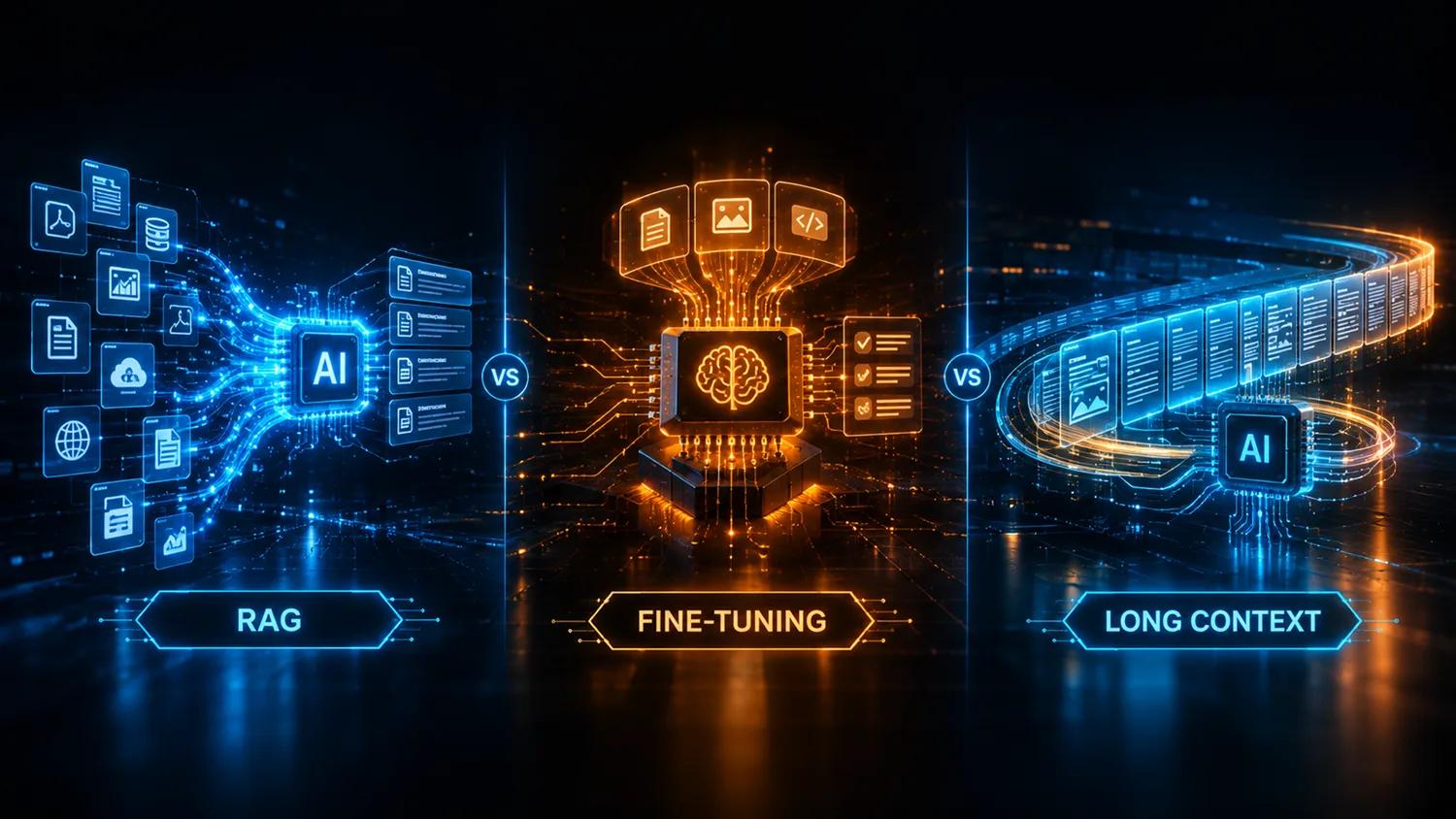
Assigning smaller, cost-efficient models to simpler tasks can reduce operating expenses while reserving more capable models for decisions that require deeper reasoning. The same trade-offs show up when you compare RAG, fine-tuning, and long context for enterprise knowledge.
Anthropic's research also highlights an important architectural trade-off: multi-agent systems are particularly useful when tasks benefit from parallelization, broader context, and multiple specialized tools. They are less attractive when tasks depend heavily on shared context or tightly connected sequential decisions.
How Do You Secure Agent Interactions and Control Permissions?
Security must be designed into the architecture rather than added after deployment.
A multi-agent system can expose sensitive business information or trigger unauthorized actions if agents receive excessive permissions.
Consider a healthcare environment where separate agents handle appointment scheduling, patient information retrieval, and billing. Each should access only the information necessary for its assigned responsibilities. Our guide to AI agent guardrails for healthcare teams covers this in more depth.
A practical security model should include:
- Role-based access control: Assign permissions according to agent responsibilities.
- Least-privilege access: Restrict agents to the minimum required tools and data.
- API authentication: Validate access to connected applications and services.
- Data protection: Apply encryption and appropriate data-handling policies.
- Human approval: Require authorization for sensitive or high-impact actions.
- Audit trails: Record agent activities, tool calls, and important decisions.
A useful distinction is that an agent recommending a payment and an agent executing a payment should not necessarily have the same permissions.
Similarly, an agent identifying a potential healthcare risk should not automatically be authorized to make a clinical decision.
The architecture must define where autonomy ends and human accountability begins.
6. How Do You Monitor and Optimize Multi-Agent Systems?
Deployment is not the final stage of multi-agent engineering. Once agents begin interacting with real business systems, their performance must be continuously evaluated.
Monitoring helps identify where workflows slow down, which agents generate errors, how often tasks require human intervention, and whether additional agents are delivering sufficient value.
How Do You Trace, Log, and Debug Agent Interactions?
Traditional application monitoring often focuses on requests, responses, and system errors. Multi-agent applications require additional visibility into the decisions and interactions occurring between agents.
For example, if a customer service workflow fails, developers should be able to identify:
- Which agent received the original request?
- Which agent was assigned the next task?
- What information was transferred?
- Which tool or API was called?
- Did an agent return an invalid response?
- How many retries occurred?
- Where did execution stop?
A shared trace ID can connect all agent interactions belonging to one workflow.
Each execution record should ideally capture:
- Agent identifier and assigned responsibility.
- Input and output references.
- Model and tool usage.
- Execution duration.
- Token consumption and estimated cost.
- Handoff and retry history.
- Validation results and approval status.
Sensitive information should be protected through appropriate logging and retention policies.
This level of visibility makes it easier to reproduce failures, identify bottlenecks, and improve individual agent performance without redesigning the entire application. Teams planning agentic AI deployment should build this tracing in from the first release.
How Do You Scale Multi-Agent Systems Without Increasing Costs Unnecessarily?
Scaling should begin with performance measurements rather than assumptions about how many agents an application needs.
Establish a baseline before expanding the architecture.
Once these metrics are available, improvements can be introduced in stages.
Optimize model allocation: Use models according to task complexity rather than assigning the most expensive model to every agent.
Improve parallel execution: Run independent tasks simultaneously where dependencies and data consistency allow it.
Reduce unnecessary context: Transfer relevant information rather than complete conversation histories.
Introduce workload controls: Apply concurrency limits, timeouts, rate limits, and retry policies.
Evaluate agents independently: Test individual agents as well as the complete workflow to identify where errors originate.
Review business outcomes: Compare the time, cost, accuracy, and operational effort of the automated process against the original workflow.
A scalable architecture should demonstrate that adding agents improves a business outcome without creating disproportionate operating expenses.
7. Preparing Your Multi-Agent Architecture for 2027
The next phase of enterprise AI will not be defined by how many agents an organization deploys. It will be defined by how effectively those agents work together, make decisions, and deliver measurable business outcomes.
The opportunity is significant, but the implementation gap remains. According to McKinsey's State of AI 2025 survey, 62% of respondents said their organizations were at least experimenting with AI agents, while nearly two-thirds had not yet begun scaling AI across the enterprise. Only 39% reported enterprise-level EBIT impact from AI.
For 2027, organizations should move beyond isolated AI experiments and establish clear implementation priorities:
- Architecture readiness: Identify workflows that genuinely benefit from multiple specialized agents.
- Operational readiness: Establish communication protocols, memory management, and execution controls.
- Security readiness: Define agent permissions, data boundaries, and human approval requirements.
- Financial readiness: Measure cost per completed task, latency, and business value.
- Scaling readiness: Build monitoring, testing, and recovery mechanisms before expanding deployment.
This is where experienced AI engineering becomes important. Businesses need more than access to AI models or orchestration frameworks. They need an engineering partner who can evaluate existing workflows, select the right architecture, integrate enterprise systems, and develop agents that operate within defined business requirements.
At Agile Infoways, our AI engineering capabilities span custom AI applications, agentic AI development, multi-agent workflows, intelligent automation, enterprise integrations, and AI infrastructure.
The question to consider before entering 2027 is not whether your business needs more AI agents. It is whether your current architecture can support the level of autonomy, security, and operational complexity you want to achieve.
Start by identifying one high-value workflow, evaluate its automation potential, and build an architecture that can grow with your business.

Written by
Pratik Kantesiya
AI Engineering Lead
Pratik leads AI engineering at Agile Infoways, where he architects production AI systems for enterprises across healthcare, BFSI, and logistics. He writes about practical AI delivery — what works, what does not, and what most teams miss between proof-of-concept and production.