Quick summary: The blog breaks down how Salesforce development company's multi-agent AI changes enterprise workflows, introducing digital labor units, self-managing processes, and tighter governance models. Leaders will learn what these shifts mean for operations, productivity, and organizational design as Agentforce is about to change the dynamics of how work moves across systems in 2026.
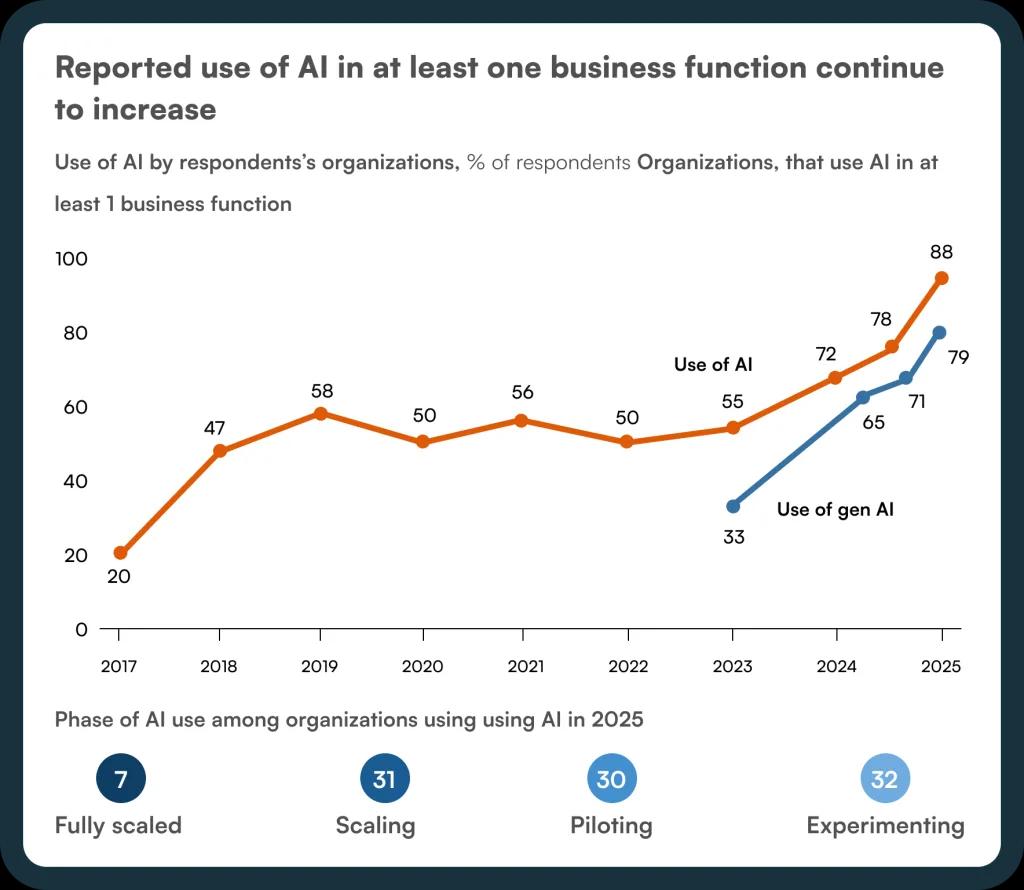
2026 will be shaping up to be the year when business operations shift gears, from rule-based automation to true, autonomous intelligence. The concept of "agents managing agents" isn't sci-fi anymore; it's rapidly becoming a board-room agenda. According to recent research by McKinsey & Company, 23% of enterprises report scaling agentic AI systems today. Meanwhile, market analysts estimate the global AI-agent software market will grow from roughly USD 5.4 billion in 2024 to over USD 50 billion by 2030, a compound annual growth rate of nearly 45%.
Well, this isn't just another technology milestone for a leading Salesforce development company in USA; it is an inflection point. Systems that once followed fixed workflows are now evolving into interconnected, self-coordinating networks of cognitive "workers". These agents draw from real-time context, embed semantic search, and trigger actions across enterprise systems. All while abiding by governance, identity and audit frameworks.
In this blog, you'll explore why this shift matters, why enterprises are prioritizing to hire Salesforce developers and AI engineers, how it's backed by concrete technical advances, and what your organisation needs to do before 2026 hits full stride. You'll get to learn: the maturation of AI agents, the rise of multi-agent orchestration, the underpinning vector-search and retrieval-augmented generation (RAG) technologies, plus the organisational readiness required.
If you're leading a sales, service, or operations unit, now's the BIG TIME to move from thinking about automation to architecting a genuinely intelligent enterprise nervous system with the best Salesforce development company in USA.
Understanding the Agentforce Evolution
Agentforce is entering a phase where AI ML services no longer acts alone but communicate, coordinate, and route tasks the way seasoned teams do. Business leaders are paying close attention, and for good reason, multi-agent systems are gaining real traction across industries, with measurable impact on speed, accuracy, and efficiency.
What Multi-Agent Orchestration Means
Multi-agent orchestration refers to a coordinated network of AI agents that distribute work across functions in real time. Instead of relying on a single agent to juggle every task, organizations can deploy multiple agents, each trained for a specific job. Gartner reports that over 45% of enterprises are experimenting with agentic AI, reflecting a clear shift toward distributed intelligence.
Orchestration enables agents to share context, request support from peers, and route tasks without bogging down workflows. This approach mirrors a well-run operational team: the right task is directed to the right specialist at the right moment, cutting down delays and keeping processes running like clockwork.
How "Agents Managing Agents" Actually Works
"Agents managing agents" describes how AI ML development company in USA make AI units to coordinate with one another using pre-defined rules, objective boundaries, and context signals. When one agent encounters a task outside its scope, such as interpreting contractual language or running a compliance check, it hands the work to another agent purpose-built for that function.
Deloitte notes that AI-driven delegation will rise roughly 30% year-over-year through 2027, showing strong momentum behind this model. These handoffs are triggered using semantic embeddings, vector search, and structured context windows, which give agents a shared understanding of the situation. The result is a smooth sequence of decisions without constant human course-correction or fragmented task execution.
Key Components: Atlas Engine, MCP, Command Center
Three components drive this multi-agent shift inside Agentforce. The Atlas Engine strengthens reasoning logic, multi-step execution, and long-context retention. The leading Salesforce development company allows agents to process nuanced workflows such as case analysis or policy interpretation. According to Forrester, systems with advanced reasoning engines show up to 38% higher task accuracy, a key advantage for enterprise workloads.
With Model Context Protocol (MCP), the Salesforce development company gives agents the ability to communicate with external systems, Slack, Notion, AWS, ERP, HRMS, while honoring identity and access rules. The Command Center acts as the oversight hub, letting leaders monitor performance, handoffs, errors, and agent behavior in real time. Together, they create a stable foundation for large-scale agent coordination.
Core Technical Advancements Powering 2026
The technical foundation behind Agentforce's 2026 capabilities is built on advancements that move AI far beyond simple task automation. These features allow agents to act with sharper context, broader awareness, and smoother system-to-system coordination, qualities leaders increasingly expect in modern enterprise operations.
Native Vector Search Across Clouds
Native vector search gives Agentforce the ability to work with meaning instead of relying on exact text matches. By processing embeddings, agents can interpret intent, sentiment, and relationships buried across Salesforce Clouds. This allows them to retrieve insights from notes, messages, documents, or interactions with a level of nuance closer to real human comprehension.
Agents no longer fumble with vague keywords; they understand patterns in conversations, product issues, or historical activity. For leaders, this means faster decisions, fewer blind spots, and a smoother flow of information without constant manual lookup.
Real-Time Context Windows & RAG
Real-time context windows allow agents to stay current as new information surfaces, reducing the friction caused by outdated context. These windows shift dynamically as data updates across records, interactions, and system events. When paired with Retrieval-Augmented Generation (RAG), agents can reason with LLM capabilities while grounding their outputs in accurate, organization-specific content.
This combination supports clearer decision chains, fewer misinterpretations, and stronger alignment with business policies. The leading AI ML development company in USA gives agents a steady grip on both the big picture and the fine print during multi-step workflows.
Multimodal Inputs (Docs, Images, Voice)
Multimodal processing allows Agentforce agents to analyze files, images, screenshots, PDFs, or voice transcripts with ease. Instead of pausing a workflow to wait for human review, an agent can read a contract, interpret a damaged product image, or extract insights from a voice note in seconds.
This capability mirrors real-world scenarios where business teams handle diverse formats throughout the day. With multimodal input support, digital labor gains a wider skill set. It reduces friction in processes that depend on visual or document-based interpretation.
Cross-System Action Execution (ERP, HRMS, Apps)
Cross-system execution allows Agentforce to act across ERP, HRMS, finance tools, or custom applications without breaking flow. Agents can trigger refunds, update employee records, route compliance steps, or initiate supply chain actions from a single starting point. The best Salesforce development service provider in USA removes the siloed nature of traditional enterprise systems and creates a more fluid operational chain.
Actions no longer stall between platforms or require repeated human intervention. Instead, workflows progress smoothly across the full application stack, giving leaders a more unified and predictable operational rhythm.
How Enterprise Workflows Will Change
As Agentforce advances, enterprise workflows are poised to shift from predictable, step-by-step execution toward AI-driven processes that run with higher awareness and tighter coordination. These changes won't feel incremental; they'll redefine how work moves across teams, systems, and decision layers inside modern organizations.
From Tasks to Autonomous Workflows
Agentforce moves the enterprise away from task-based automation toward workflows that run with greater autonomy. Instead of lining up individual tasks like items on a checklist, agents take in real-time context, interpret what needs to happen next, and route actions without frequent manual cues. Workflows begin to behave like living sequences rather than rigid scripts, adjusting to exceptions and nuances as they arise.
When multiple agents coordinate simultaneously, the organization gains smoother flow across sales, service, finance, and operations. This model cuts the repetitive back-and-forth that bogs teams down and gives business leaders a consistent, predictable rhythm across their core processes.
Role of Guardrails, Approval Policies, Governance
As agents take on more responsibility, guardrails and approval layers become central to maintaining order. Agentforce relies on clear policies that dictate who can act, when actions require escalation, and what boundaries must be respected across sensitive systems. Governance frameworks define how far agents can go before tapping a human for review, and approval paths keep high-impact decisions aligned with organizational rules.
Identity controls, audit visibility, and policy-based restrictions work together to maintain structure as workflows become more autonomous. Leaders gain the ability to grant agents broader reach without creating a free-for-all, allowing AI-driven activity to stay consistent with enterprise expectations.
AI-Driven Self-Optimization in Processes
Self-optimization shifts workflows from static routines to processes that refine themselves over time. Agentforce agents observe patterns, spot friction points, and adjust sequences to keep work moving at a steady clip. Instead of waiting for a human to diagnose slowdowns or update process maps, agents adjust routing logic, update task priorities, or modify sequencing based on real-world outcomes.
This creates workflows that adapt to new products, customer behavior shifts, seasonal patterns, or operational constraints. The result is a more responsive system, one that doesn't sit still but continuously seeks better ways to execute tasks across departments without adding extra manual overhead.
High-Impact Use Cases for 2026
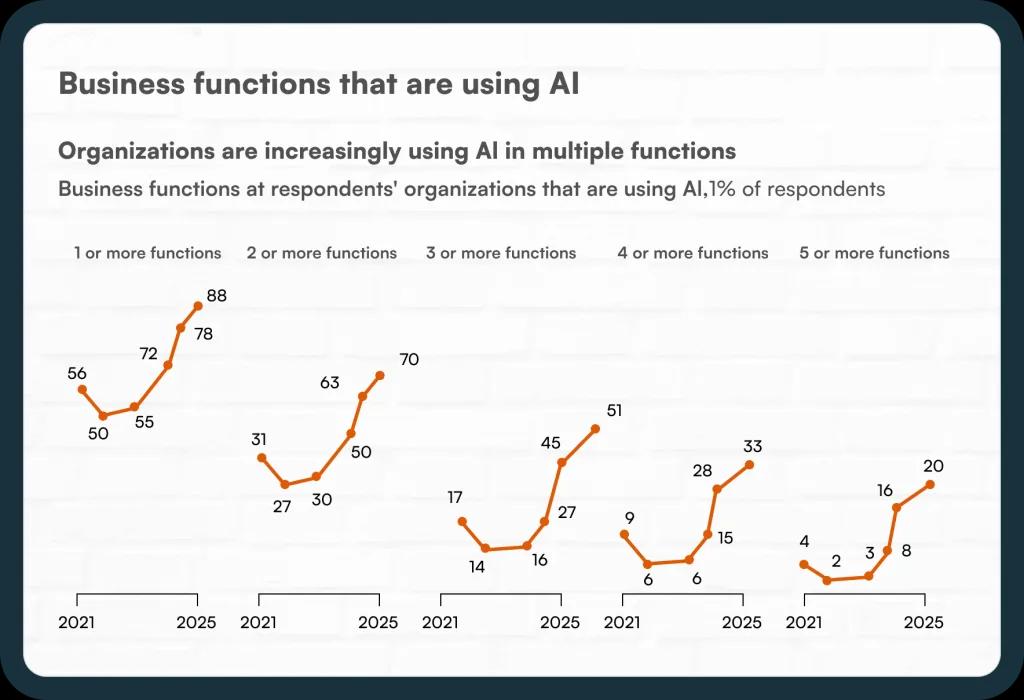
The rise of multi-agent systems in Agentforce is setting the stage for enterprise workflows that run smoother and faster than traditional automation ever allowed and for that businesses need to hire Salesforce developers and hire AI architects. These use cases show how AI is stepping into roles that once required constant oversight, bringing sharper judgment and tighter coordination across core business functions.
Sales — Auto-Pipeline Management & Forecasting
In sales, Agentforce agents take on the heavy lifting of pipeline oversight by scanning signals across deals, interactions, product usage, and historical activity. Instead of reps juggling follow-ups or manually tracking deal movements, agents adjust stages, flag risks, and route next steps automatically.
They also build rolling forecasts based on context and patterns across opportunities, giving leadership a more accurate read without the usual guesswork. This creates a sales motion that feels more like a steady, well-managed conveyor belt than a queue of unrelated tasks.
Service — Autonomous Case Resolution
Service operations benefit from agents that can interpret case details, analyze sentiment, review past interactions, and determine the most logical steps toward resolution. Instead of waiting for human input, an agent identifies root causes, drafts responses, triggers refunds, updates records, or escalates to specialized agents when needed.
These systems keep service queues moving by cutting out the pauses that typically form between each step. Customers get quicker resolutions, and teams spend less time wrestling with repeat issues or manually piecing together case context.
Finance — Policy Enforcement & Reconciliation
In finance, agents enforce policy rules with consistency that manual work often struggles to match. They review transactions, match records against rules, detect exceptions, and initiate the right corrective steps. Whether it's reconciling accounts, reviewing expense claims, or routing approvals, agents maintain accuracy by applying the same logic every time.
Salesforce development company enable agents to reduce bottlenecks by managing cycles that usually require back-and-forth communication. This gives finance teams more breathing room to focus on judgment-intensive initiatives rather than repetitive validation tasks.
Operations — Multi-Agent Coordination Across Systems
Operations teams gain the most from multi-agent coordination across systems such as ERP, HRMS, billing, supply chain tools, and compliance platforms. Agents monitor workflows end-to-end, spot breakdowns, and route tasks to peers designed for specific actions. Whether it's adjusting inventory records, initiating fulfillment steps, or triggering compliance workflows, agents keep processes aligned across multiple apps without missing a beat. This reduces friction between departments and keeps day-to-day operations moving with fewer handoffs and interruptions. Therefore, the enterprises are actively choosing to hire AI engineers besides hiring Salesforce developers.
Risks & Challenges Leaders Must Prepare For
As Agentforce grows more capable, leaders must keep their eyes on the flipside of progress. While multi-agent systems offer speed and precision, they also introduce new risks that require steady oversight. Understanding these challenges upfront can save organizations from costly missteps down the road.
AI Over-Reliance & Human Oversight
Hire AI developers since they allow AI-driven workflows run smoothly, sometimes a little too smoothly, making it easy for teams to lean on agents without actively supervising them.
Over-reliance becomes a problem when agents execute decisions that appear correct on the surface but fail to account for context that only a human would catch. Therefore, it is necessary to hire Salesforce and AI developers.
Leaders must set clear limits on where human review is mandatory, especially for exceptions, escalations, and decisions affecting customers or compliance. Oversight isn't about micromanagement; it's about keeping a human "in the loop" for judgment-based calls. By striking the right balance, organizations avoid the trap of letting automation run on autopilot in areas that require nuance.
Security, Identity, and Data Governance
As agents gain more access across systems, the stakes around identity controls and data governance rise significantly. Each agent acts like a digital worker, which means permissions, audit trails, and access boundaries must be as strict as those applied to employees. Misconfigured roles, weak identity protocols, or broad permissions can create major exposure points.
Leaders must lean into policies that define exactly what agents can view, modify, or execute across ERP, HRMS, CRM, and external apps. Encryption standards, logging requirements, and role-based access play a central role in protecting sensitive information. When governance is structured well, agents can operate freely without opening the door to unnecessary risk.
Managing Cross-Agent Dependencies
When multiple agents collaborate, dependencies form quickly. One agent's delay, misinterpretation, or failure can ripple into every downstream workflow. Leaders must understand how agents rely on one another and create guardrails to prevent chain reactions during outages or misfires. Without clear routing logic, an agent may pass tasks to another agent that isn't suited for the job, leading to inaccurate outcomes.
Dependency maps, fallback rules, and escalation paths help maintain order when workloads get complex. By treating agents like a distributed team, complete with responsibilities, limits, and handoff rules, organizations maintain workflow stability even when processes span multiple systems and decision layers.
Preparing Your Organization for Multi-Agent Systems
As multi-agent systems gain traction across enterprises, preparation becomes just as important as adoption itself. Organizations that lay the right foundation early will find it easier to maintain control, avoid friction, and guide Agentforce toward predictable, high-value outcomes across their core business processes.
Data Readiness & AI Governance Setup
Strong data foundations form the backbone of any multi-agent environment. Agents rely on clean, structured, and well-governed datasets to interpret context accurately and take meaningful actions. This means organizations must review data quality, define naming conventions, and standardize records across clouds and connected systems. Governance frameworks also need to be in place before agents gain broad access.
Policies around lineage, retention, access rights, and audit requirements keep operations orderly and reduce the risk of rogue decisions. Leaders should view data readiness as an operational prerequisite rather than a finishing touch, because even the sharpest agents can deliver shaky results if the underlying data is scattered or inconsistent. To verify the authenticity, you can hire Salesforce developers in USA.
Designing Agent Roles & Action Boundaries
Clear role design keeps multi-agent environments from turning into a free-for-all. Each agent must have defined responsibilities, boundaries, and triggers that dictate what it can and cannot do. By treating agents like digital members of the team, organizations can set expectations around task ownership, escalation points, and collaboration patterns.
Boundaries help avoid overlap, reduce unnecessary handoffs, and keep agents from stepping into workflows where they don't belong. Action limits, approval thresholds, and fallback logic ensure that high-impact decisions don't slip through without oversight. When roles are structured well, agents behave predictably and support a smoother, more controlled workflow ecosystem.
Upskilling Teams for Agentforce Adoption
Even the most capable AI system needs humans who understand how to direct, supervise, and refine it. Upskilling isn't about deep coding, it's about teaching teams how to work alongside autonomous agents, review outputs, and adjust decision paths when needed. Admins, analysts, and managers benefit from learning how to craft policies, tune workflows, and monitor agent behavior in real time.
Cross-functional teams should also know when to intervene and how to interpret agent-generated insights. By giving employees the right level of familiarity with Agentforce, organizations avoid misfires and maintain operational trust as AI takes on a larger share of day-to-day responsibilities.
What 2026 and Beyond Will Look Like
As Agentforce matures, enterprises are heading toward a future where AI ML services doesn't just execute tasks, it operates as part of the workforce. The coming years will push organizations into new territory, where digital labor, autonomous processes, and redesigned structures become the new normal.
The Rise of Digital Labor Units
Digital labor units will emerge as structured groups of agents trained to manage wide-ranging responsibilities across departments. Instead of treating AI as scattered utilities, organizations will organize agents into defined clusters, each focused on functions such as service triage, compliance review, forecasting, or supply operations. These units will behave much like specialized teams, coordinating tasks, sharing context, and adjusting workloads based on real-time demand.
Leaders will treat them as operational resources, complete with performance expectations, oversight rules, and measurable outputs. As these units grow more capable, they will take on a larger share of routine, repetitive, and context-heavy work that normally slows human teams down.
Enterprises Moving Toward Self-Managing Processes
Workflows will begin operating with a degree of autonomy that mirrors strong internal operations with the help of leading Salesforce development company. Instead of relying on humans to route cases, trigger follow-ups, or stitch together cross-system actions, processes will self-adjust as conditions change. Agents will interpret context, handle exceptions, and maintain process flow without waiting for manual cues.
Guardrails will remain in place, but the day-to-day mechanics will shift toward systems that keep themselves on track. This shift allows organizations to reduce friction and maintain steadier operational tempo, especially in functions that rely on constant data movement across CRM, ERP, HRMS, billing systems, and other enterprise apps.
Long-Term Impact on Productivity & Org Structure
As digital labor becomes part of the mainstream workflow, productivity patterns will shift in noticeable ways. Teams will offload a significant portion of transactional work, freeing employees to focus on higher-judgment tasks that require domain knowledge or strategic thinking. Organizational structures will adjust accordingly, with hybrid teams that combine human oversight and autonomous agent activity.
Departments may create roles focused on AI supervision, workflow tuning, and process accountability. Rather than large teams handling repetitive work, smaller groups will manage broader scopes with the support of multi-agent systems. This shift will encourage leaner operations and more resilient execution models across the enterprise.
Why Leaders Must Act Before the Curve?
As Agentforce moves deeper into multi-agent coordination, the road ahead becomes clearer: enterprises are entering a phase where digital labor will operate with far more autonomy, precision, and consistency than traditional automation ever allowed. Leaders who recognize this shift early will be better positioned to guide their organizations through the coming changes with clarity and confidence.
The rise of digital labor units, self-managing processes, and hybrid teams signals a future where AI doesn't sit on the sidelines; AI ML services in USA become woven into the fabric of daily operations. This isn't about replacing people; it's about designing systems where human judgment and AI-driven execution coexist with a defined purpose. Businesses that take the time to refine data foundations, define agent roles, and upskill their teams will step into 2026 with a structural advantage that others may struggle to match.
At its core, the Salesforce development company's move toward multi-agent systems is a shift toward operational consistency. Workflows become steadier, decisions move faster, and processes carry less friction. Leaders who prepare now will see smoother adoption, fewer surprises, and a stronger ability to steer their organizations as digital labor takes on a larger share of the workload.
The next phase of enterprise AI won't be driven by hype; it will be shaped by the companies that invest in readiness today and choose to hire Salesforce developers. And those organizations will enter 2026 with a clearer path and a more resilient operational engine guiding the road ahead!

Written by
Pratik Kantesiya
AI Engineering Lead
Pratik leads AI engineering at Agile Infoways, where he architects production AI systems for enterprises across healthcare, BFSI, and logistics. He writes about practical AI delivery — what works, what does not, and what most teams miss between proof-of-concept and production.