Quick summary
Are fragmented systems, inconsistent customer experiences, or failing marketing campaigns holding your business in United States back? You're not alone. This blog outlines the 10 biggest signs that call for Salesforce development services i USA. See how Salesforce can unify processes, improve analytics, and help you scale without friction. Ready to identify where your business stands? Let's explore.
Every business has or will become a digital company. Unfortunately, there is no other way around to avoid this shift. Slicing through the storms of disruption is the only option amid the large and well-known enterprises on one hand of the competitive market and startups rising on the other hand. Therefore, leaders must establish a foundation to innovate and operate the business confidentially.
Moreover, the global economy favors the digital experience, which starts with a strategic shift, and it emphasizes transforming technology and operating a business with intelligent capabilities. Therefore, investments are now beginning to show signs that businesses need a Salesforce development solution, and IDC expects spending to increase by $4 trillion by the end of 2027, as more organizations move toward building a sustainable digital business.
As per the latest reports from Gartner, around 49% of organizations struggle with disconnected systems which leads to poor decision-making. This is where Salesforce partners step in to offer custom workflows, and scalability customized for complex business ecosystems. Consequently, leaders are breaking down or about to break down departmental silos and deliver an optimal experience by adopting the best Salesforce development services in USA.
However, there are a few questions that still linger, like,
- How important is this shifting mindset to our business?
- How would we know our existing customization is failing?
- How should we identify the signs that indicate we need Salesforce development services?
Well, the only answer is to carry out strategic and data-driven analysis considering the operational processes and performance metrics. It includes qualitative factors, like user feedback, and quantitative data like sales figures and efficiency reports. These answers mainly point towards the growing pressure to build a resilient, intelligent, and socially responsible business model. And this reality requires the best Salesforce integration partner in USA since it drives consistent transformation with greater speed and confidence.
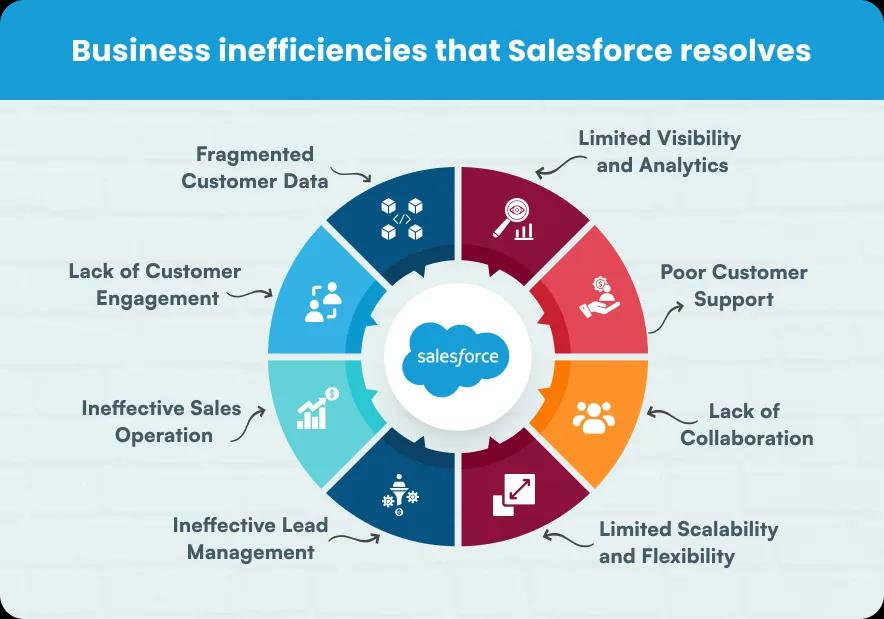
Salesforce development company addresses modern challenges by unifying applications, streamlining operations, and improving customer experiences. From ERP and eCommerce integrations to AI-driven automation, Salesforce adapts to specific business needs. So, let's identify the top signs in detail that indicate that businesses need a Salesforce development company to achieve broader digital transformation goals.
Signs That Point Businesses' Needs to Salesforce Development Services
Operational and technical challenges like rising backlogs and slow resolution times create a strong incentive to choose the leading Salesforce development and integration services in USA. Its service cloud is particularly designed to centralize and automate customer support processes. These issues often stem from fragmented data, manual processes, and inefficient workflows. All problems that Salesforce is built to solve.
1. Disconnected Systems and Data Silos
The problem
Business operations show clear signs of a disconnected system and create inefficiencies as ERP, ERP, eCommerce, and marketing tools fail to share data in real time. Since teams rely on manual exports, duplicate records arise, and decision-making suffers at every level from inaccurate insights. This slows operations and prevents businesses from fully understanding customers. It reduces efficiency and ultimately impacts growth opportunities across industries.
Salesforce integration solution
In USA, Salesforce development company integrates ERP, marketing, and eCommerce systems into a unified platform. Through APIs and middleware, it enables real-time synchronization and centralized data storage. Businesses across industries can gain one source of truth for operations, which eliminates duplication, improves accuracy, and assures seamless workflows across departments for better decisions and collaborative growth.
Salesforce integration benefits
- Real-time data synchronization
- Elimination of duplicate records
- Improved decision-making accuracy
- Faster interdepartmental collaboration
- Centralized system monitoring
2. Manual Processes Slowing Productivity
The problem
Reliance on spreadsheets and repetitive tasks drains time and creates high error rates. Manual updates delay workflows and reduce productivity, especially for sales, support, and finance teams. Without automation, employees waste hours on tasks that could otherwise be streamlined, which leaves little to no focus for revenue-generating or strategic activities.
Salesforce automation solution
With Salesforce automation, enterprises can replace manual tasks with workflows, triggers, and scheduled updates. It moves data instantly between platforms, while approval processes and reporting are automated. Businesses reduce errors, speed up operations, and free employees to focus on strategic initiatives instead of repetitive manual entry or spreadsheet-based management.
Salesforce automation benefits
- Reduction in manual errors
- Faster operational workflows
- Improved staff productivity
- Real-time process automation
- Higher employee efficiency
3. Poor Visibility Into the Customer Journey
The problem
When there is a problem with internal processes, data management, and business outcomes, businesses can easily identify signs in the customer journey. It shows that scattered business systems prevent seeing the complete customer journey. Sales, marketing, and support data remain fragmented, making it difficult to track interactions, preferences, or purchase behavior. It results in missed upselling opportunities, inconsistent service delivery, and poor customer relationship management across different touchpoints.
Customer journey optimization with Salesforce
Salesforce development partner in USA provides a 360° customer view since it unifies data from all channels, sales, marketing, and support. With custom dashboards and centralized CRM records, businesses track every interaction in real time, personalize engagements, and ensure seamless experiences across customer lifecycles. This creates stronger relationships and measurable customer satisfaction.
Salesforce-powered customer journey benefits
- 360° customer visibility
- Personalized customer interactions
- Better lifecycle management
- Improved service consistency
- Stronger relationship building
4. Ineffective Sales Pipeline Management
The problem
Ineffective sales pipelines, outdated or scattered lead data, lead to missed opportunities. Without accurate forecasting, sales teams struggle to track deals, prioritize leads, or evaluate pipeline health. This limits visibility into revenue potential and slows conversions. It often causes businesses to lose a competitive advantage. These signs often center on a lack of visibility, inefficient processes, poor data quality, and negative business outcomes.
Salesforce sales solution
Salesforce pipeline management offers real-time deal tracking, automated lead scoring, and accurate forecasting. Sales reps see which opportunities need focus, managers gain predictive insights, and businesses align strategies for higher conversions when they hire Salesforce developers in USA. It ensures pipeline health and revenue projections remain transparent and reliable.
Salesforce sales cloud benefits
- Accurate revenue forecasting
- Prioritized lead management
- Real-time deal tracking
- Improved pipeline visibility
- Higher conversion rates
5. Difficulty Scaling Operations
The problem
As businesses grow, legacy systems struggle to manage increased data, users, and applications. This causes downtime, process bottlenecks, and inefficiencies. Scaling becomes expensive and resource-heavy without adaptable solutions. It prevents enterprises of all sizes from meeting market demands effectively.
Salesforce solution
Salesforce's custom development services and cloud-native architecture scale effortlessly. It supports growing databases, new users, and expanded workflows while maintaining performance. Businesses adapt easily without heavy reengineering, while ensuring smoother scalability, flexibility, and continued reliability as operations expand.
Top 5 Salesforce benefits
- Seamless business scalability
- Flexible infrastructure support
- Reduced downtime risks
- Cost-efficient system upgrades
- Future-ready adaptability
6. Inconsistent Customer Experience
The problem
Fragmented systems delay responses and reduce personalization, leaving customers with inconsistent service across channels. This results in dissatisfaction, churn, and reduced lifetime value. Without unified tools, businesses cannot meet rising customer expectations for speed and personalization.
Salesforce customer engagement platform solution
Salesforce development partners deliver omnichannel engagement by integrating communication tools, CRM, and support systems. Teams respond faster, access customer history instantly, and provide consistent service across email, chat, or social. Personalized interactions improve satisfaction and retention rates significantly.
Top Salesforce CEP benefits
- Omnichannel service delivery
- Faster response times
- Personalized customer engagement
- Higher customer satisfaction
- Reduced churn rates
7. Complex Reporting and Analytics Gaps
The problem
Data scattered across systems makes reporting slow and inaccurate, and it is one of the outgrown signs of standard reporting, indicating businesses need a more complex analytics solution. Businesses lack real-time insights into KPIs, performance metrics, and trends. This limits the ability to make informed decisions or forecast growth effectively.
Salesforce CRM analytics solution
Salesforce dashboards and BI integrations centralize reporting. Businesses gain real-time analytics, predictive insights, and customized dashboards. This enables leadership to identify trends quickly, evaluate performance, and make accurate, data-driven decisions with confidence.
Salesforce CRM analytics benefits
- Real-time analytics access
- Centralized performance reporting
- Predictive trend analysis
- Customized dashboard creation
- Smarter business decisions
8. Security and Compliance Concerns
The problem
Enterprises handling sensitive customer data face risks of breaches and non-compliance with standards like GDPR or HIPAA. Weak systems create vulnerabilities, fines, and reputational damage, making security a top concern.
Salesforce comprehensive security solution
Salesforce ensures data security through built-in encryption, access control, and compliance frameworks. Custom governance tools align with industry regulations, safeguarding customer information while minimizing risks of breaches or penalties.
Salesforce security benefits
- Robust data protection
- Regulatory compliance assurance
- Reduced breach risks
- Enhanced customer trust
- Centralized security management
9. Marketing Campaigns Failing to Convert
The problem
When marketing automation tools and CRM data are disconnected, campaigns lack personalization and fail to target the right audiences. Businesses struggle to measure ROI, reducing lead quality and conversions.
Salesforce marketing solution
Salesforce aligns marketing automation with CRM data. It enables personalized campaigns, real-time engagement tracking, and ROI measurement. Teams improve lead nurturing and customer targeting while driving stronger campaign outcomes.
Salesforce marketing solution benefits
- Personalized campaign delivery
- Better lead nurturing
- Improved conversion rates
- Accurate ROI measurement
- Aligned marketing-sales goals
10. Lack of Ongoing Support and Maintenance
The problem
Without continuous support, systems face downtime, errors, and outdated features. Enterprises risk inefficiency and security gaps, affecting daily operations and long-term reliability.
Salesforce support and maintenance partner
Salesforce support services offer monitoring, upgrades, and troubleshooting. Businesses maintain reliability, security, and compliance while ensuring systems adapt to evolving needs, minimizing risks of downtime or operational disruption.
Salesforce support and maintenance partner benefits
- Continuous system monitoring
- Reduced downtime risks
- Regular feature upgrades
- Stronger system reliability
Your Next Move Towards an Intelligent Salesforce CRM
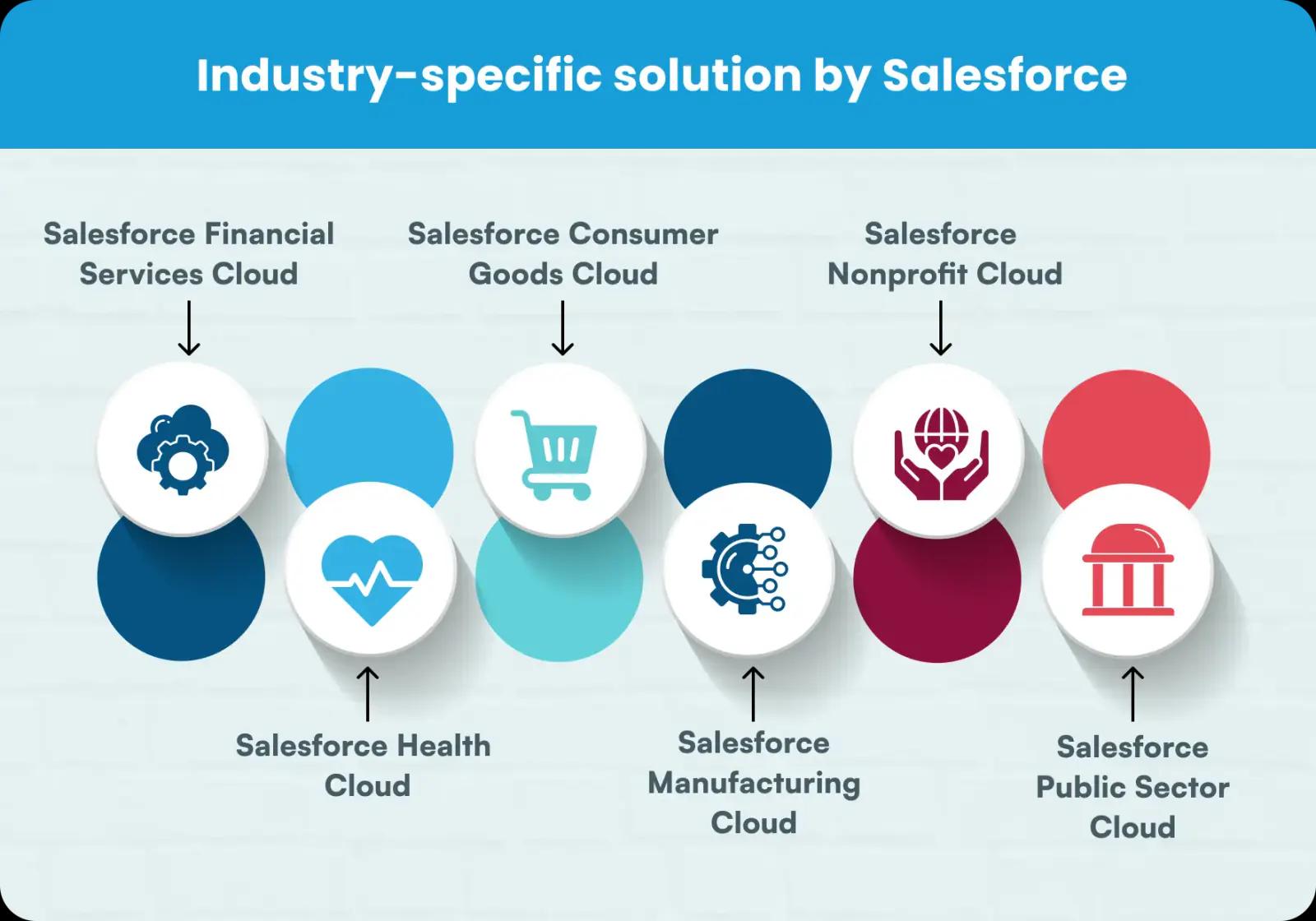
Amid the highly volatile market, many business functions are still reacting to change rather than preparing for it, leaving gaps in choosing the best-fit technology and skill development. For businesses, that means opportunity for those ready to act. However, by building a future-facing tech stack and being strategic about business growth, you can position yourself to advance, pivot, or land a new Salesforce development partner in USA as organizations adapt to shifting needs.
In a way, you are still gutting down on potential business growth opportunities if you are giving second thoughts on continuing with the obsolete technologies and siloed processes. It's BIG TIME to embrace the change and choose the best-fit technology by selecting the best Salesforce development company in USA that gives A RELIEF AND SUSTAINABLE COMPETITIVE EDGE!

Written by
Pratik Kantesiya
AI Engineering Lead
Pratik leads AI engineering at Agile Infoways, where he architects production AI systems for enterprises across healthcare, BFSI, and logistics. He writes about practical AI delivery — what works, what does not, and what most teams miss between proof-of-concept and production.