Quick summary: Still relying on slow pipelines? This blog explains how event-first intelligence powers real-time AI actions, cuts manual effort, reduces delays, and lowers operational load, helping teams act instantly using live data signals. Read the blog now and see how it works across modern business systems
Event-First Intelligence refers to systems that center around events, instantly generated data points such as a user click, a payment transaction, or a sensor alert, and AI ML development company in USA use them as the foundational source for analytics and action. Unlike traditional systems that accumulate data over intervals, event-first architectures process and respond to data as it flows in, triggering analytics and AI models that operate in near real time.
These approaches are becoming essential as organizations look for insight within milliseconds rather than hours. According to 2025 IDC data , 63% of enterprise use cases now require data processing within minutes to stay relevant.
How Traditional Data Pipelines Work
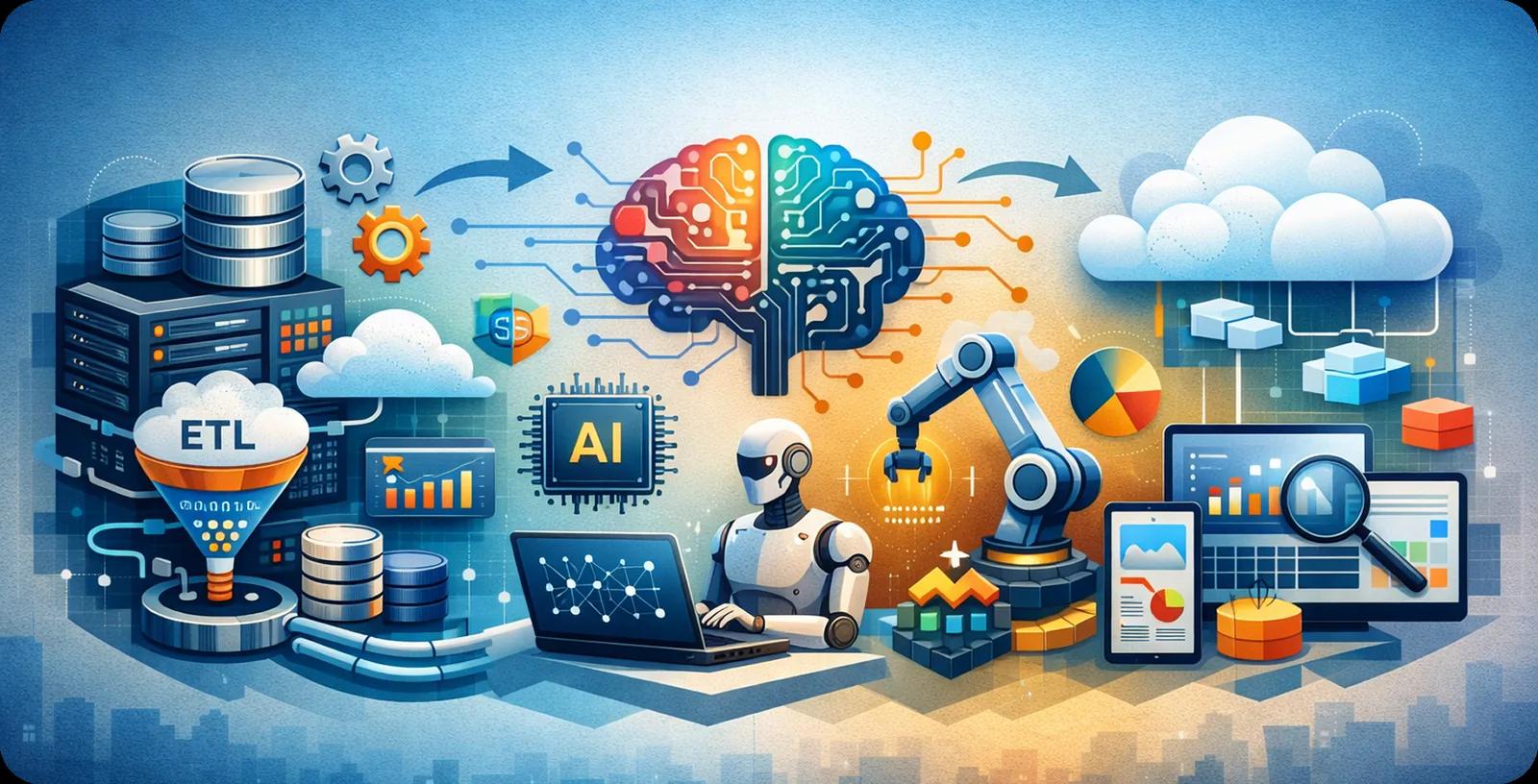
Traditional data pipelines typically use batch processing and scheduled Extract, Transform, Load (ETL) jobs. In this model, a data engineering company in the USA collects large volumes of data at defined intervals, hourly, nightly, or weekly, then moves it through stages where it's cleaned, transformed, stored, and analyzed. While this approach works well for historical reporting and compliance, it introduces latency between when data is generated and when insights become available.
Because these pipelines operate on periodic updates rather than continuous streams, decisions based on batch results may lag behind real-world conditions by hours or days. This delay limits responsiveness in fast-moving environments where customer behavior or system performance can shift rapidly.
Why Business Decisions Need Faster Data
Amid the current market dynamics, business expectations are shaped by immediacy. Consumers expect personalization and responsiveness; competitors act on emerging trends quickly, and operational risks can escalate in moments. Research shows the streaming analytics segment is growing rapidly, from a $23.4 billion market in 2023 to an estimated $128.4 billion by 2030 at a 28.3% CAGR, which reflects broader demand for real-time data processing.
In parallel, Gartner predicts that by 2027, half of business decisions will be autonomously supported or automated by AI agents that depend on timely signals. These shifts highlight a fundamental expectation: decisions should reflect what's happening now, not what happened yesterday. When data arrives continuously, and analytics react instantly, organizations can respond to dynamic customer patterns, flag anomalies on the fly, and drive AI models that operate on live data streams.
What Makes Data-Triggered AI Different
Data-triggered AI operates on live signals rather than delayed datasets. Instead of waiting for data pipelines to complete, an AI ML development service provider enables models to react the moment an event occurs. This shift allows systems to make decisions while context is still relevant. The result is faster actions, reduced lag, and intelligence that aligns closely with real-world activity as it unfolds.
Event Streams vs. Batch Data
Event streams and batch data differ mainly in timing and flow. Understanding this distinction is key to event-first intelligence.
- What an event is - A single, time-stamped action or change captured as it happens
- Common event examples -
- A payment transaction
- A user click or page view
- A login attempt
- A sensor reading from IoT devices
- Event streams - Continuous flow of events processed instantly, often via platforms like Kafka or cloud streaming services
- Batch data - Large sets of records collected and processed at scheduled intervals
Event streams prioritize immediacy, while batch data focuses on volume and historical analysis.
How AI Responds to Events in Real Time
When AI is connected directly to event streams, responses happen immediately instead of after pipeline execution.
- Events trigger AI models the moment data is generated
- Models analyze context using current and recent signals
- Decisions occur in milliseconds, not hours
- Examples include fraud detection during a transaction, product recommendations during a session, or alerts triggered by abnormal sensor readings
- No dependency on full ETL completion or scheduled jobs
This approach allows AI systems to act while the situation is still active, which is critical for modern, high-speed business operations.
Core Building Blocks of Event-First Systems
Event-first systems rely on components designed to move, process, and react to data instantly. Instead of storing information first and analyzing it later, these systems prioritize continuous flow. Each building block plays a specific role in capturing events, distributing them reliably, and enabling applications and AI ML development company enable models to act on fresh data without delay.
Event Brokers and Streaming Platforms
Event brokers act as the central nervous system of event-first systems. They receive events and deliver them to multiple consumers in real time.
- Apache Kafka - Handles high volumes of events with durable storage and replay capability
- Amazon Kinesis - A managed cloud service for ingesting and processing streaming data
- Apache Pulsar - Separates storage and compute, allowing flexible scaling
These platforms allow systems to react to events as they happen rather than waiting for scheduled transfers.
Real-Time Feature Stores
Real-time feature stores provide machine learning models with the latest data context at inference time.
- Store continuously updated features derived from live events
- Serve the same features used during model training and prediction
- Reduce inconsistencies between historical and real-time data
- Allow AI models to respond using current user behavior or system state
This setup keeps model decisions aligned with what is happening right now.
Event-Driven Architecture Basics
Event-driven architecture structures applications around events instead of direct requests.
- Producers create events when actions occur
- Event brokers distribute those events
- Consumers react to events and perform tasks
- Triggers start workflows or AI inference
- Microservices operate independently and scale as needed
This design supports responsive systems that adapt quickly to continuous change.
How Data Pipelines Are Evolving
Data pipelines are shifting from static, schedule-based systems to continuous, event-aware flows. This evolution is driven by the need for faster insights and timely actions. Modern pipelines are no longer limited to moving data for reports; they now support real-time analytics and AI use cases that rely on fresh, continuously updated information.
From ETL to ELT to Event-Driven Flows
Traditional ETL pipelines extract, process, and load data in fixed windows. ELT improved scalability by loading raw data first and processing it later in the warehouse. Event-driven flows take this further by processing data as it changes.
Instead of waiting for daily or hourly jobs, pipelines now support continuous updates using streams. This approach reduces delay, keeps analytics current, and allows the AI ML development company in USA to react immediately to new signals rather than outdated snapshots.
The Role of CDC (Change Data Capture)
Change Data Capture tracks small changes in source systems, such as inserts, updates, or deletes at the database level. Rather than reprocessing full tables, CDC publishes only what has changed as events.
These change events feed streaming platforms in near real time, keeping downstream systems updated continuously. For AI use cases, CDC provides fresh behavioral and transactional data that improves decision accuracy, supports real-time scoring, and allows models to act on the latest system state without waiting for full pipeline runs.
Practical Use Cases of Data-Triggered AI
Data-triggered AI turns live events into immediate action across industries. Instead of analyzing data after the fact, AI models react while situations are still unfolding. This approach improves speed, accuracy, and operational control. Below are practical scenarios where event-driven intelligence delivers clear business value using real-time signals.
Fraud Detection and Transaction Monitoring
In fraud detection, a comprehensive AI ML service provider in USA evaluates transactions the moment they occur. Each payment, login, or transfer is treated as an event and scored instantly. This allows organizations to stop suspicious activity before it escalates, rather than identifying fraud hours later through batch reports.
How it works and benefits organizations:
- Transaction events stream into AI models in milliseconds
- Models compare behavior against real-time patterns, not static rules
- High-risk transactions are flagged or blocked immediately
- False positives are reduced through continuous learning
- Financial losses and chargeback costs are significantly lowered
Real-Time Personalization
Real-time personalization adjusts user experiences based on live behavior. Clicks, searches, and session activity trigger AI models that adapt content while the user is still active, creating relevant and timely interactions across digital platforms.
How it works and benefits organizations:
- User actions generate events during live sessions
- AI updates recommendations using the current context
- Content, pricing, or offers adjust instantly
- Engagement increases due to timely relevance
- Conversion rates improve without manual intervention
Predictive Maintenance With Sensor Events
Predictive maintenance relies on continuous sensor data from machines. Temperature changes, vibrations, or pressure readings act as events that feed AI models trained to detect early signs of failure before breakdowns occur.
How it works and benefits organizations:
- Sensors emit events at regular intervals
- AI analyzes patterns against historical failure data
- Early warnings trigger maintenance tasks
- Unplanned downtime is reduced
- Equipment lifespan and operational reliability improve
Automated Customer Support Actions
Customer support systems use events such as ticket creation, error logs, or user frustration signals to trigger automated responses. AI-driven workflows act immediately, reducing wait times and manual workload.
How it works and benefits organizations:
- Support events trigger bots or workflows instantly
- AI routes issues to the right channel or agent
- Common problems are resolved automatically
- Response times drop significantly
- Support teams focus on complex, high-value cases
These use cases show how data-triggered AI converts real-time events into decisions that align closely with current business conditions.
Advantages of Event-First Intelligence
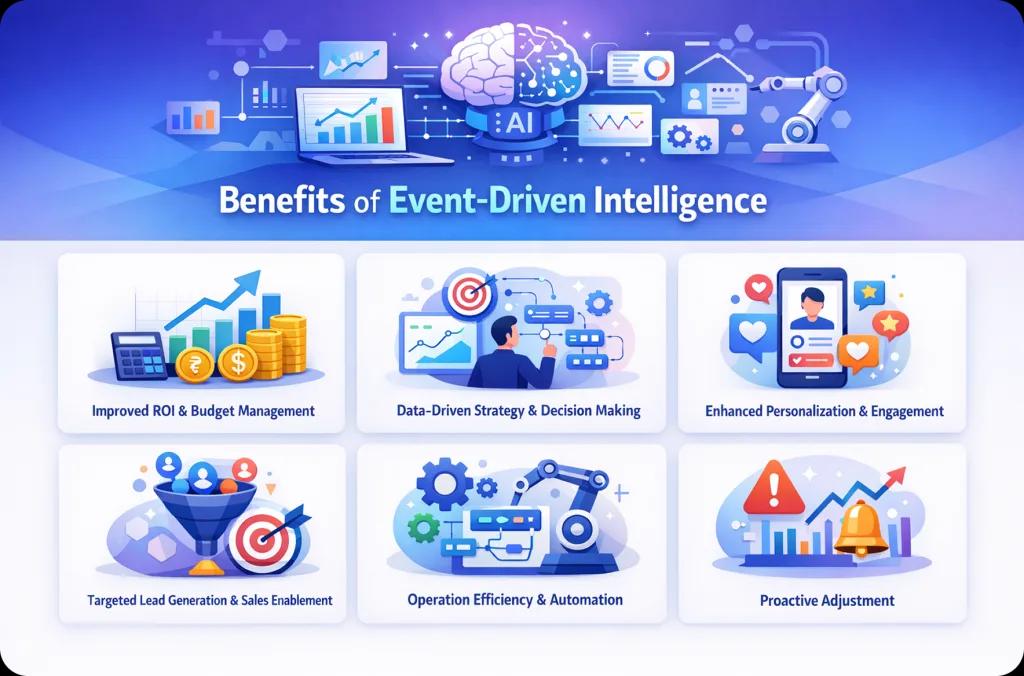
Event-first intelligence shifts systems from delayed analysis to immediate response. By processing data as events occur, organizations gain faster insights, improved AI performance, and smoother scalability. These advantages are especially important in environments where timing, accuracy, and system reliability directly affect business outcomes.
Lower Latency for Decision-Making
Event-first systems process data continuously, cutting out wait times caused by scheduled jobs. Events flow directly into analytics and AI models as soon as they are generated.
Decisions are made in milliseconds rather than minutes or hours. This speed allows actions such as fraud prevention, dynamic pricing, or system alerts to happen while conditions are still relevant, not after the moment has passed.
Better Model Accuracy With Fresh Data
AI models perform better when they rely on current information. Event-first intelligence feeds models with the latest user behavior, transactions, and system signals.
Fresh data reflects real-world changes immediately, reducing the risk of outdated assumptions. This leads to more accurate predictions, better scoring results, and decisions that align closely with actual conditions instead of historical averages.
Scalable Data Flow Across Distributed Systems
Event-first architectures are built for scale. Streaming platforms distribute events across partitions and consumers. It allows an AI software development company to process millions of events efficiently.
Workloads are spread across distributed services, preventing bottlenecks. As event volume grows, new consumers can be added without disrupting existing flows, supporting steady performance even during peak demand periods.
Challenges and Considerations
While event-first intelligence delivers speed and responsiveness, it also introduces new challenges. Continuous data flow demands thoughtful design, strong quality controls, and clear visibility across systems. Addressing these areas early prevents downstream issues and supports reliable, real-time decision-making at scale.
Complexity in System Design
Event-first systems require careful planning to avoid inconsistency and confusion. Event schemas must be clearly defined and versioned so producers and consumers stay compatible. Event ordering becomes important when multiple updates occur quickly. Replay mechanisms are also needed to reprocess events during failures or model updates. Without structure, systems can become difficult to manage as they grow.
Ensuring Data Quality in Real Time
Real-time systems must handle imperfect data without slowing down processing. Validation checks filter malformed events as they arrive. Deduplication logic prevents repeated events from skewing analytics. Event enrichment adds context, such as user attributes or timestamps, before data reaches AI models. These steps keep decisions accurate even when data arrives continuously and at high volume.
Governance and Observability
Event-first architectures require visibility across every stage of data flow.
Each event should be traceable from source to consumer for auditing and debugging. Logs, metrics, and traces help teams monitor throughput, latency, and failures. Strong observability allows teams to identify issues quickly, meet compliance requirements, and maintain confidence in real-time decision systems.
Future of AI in Event-Driven Ecosystems
Event-driven ecosystems are shaping the next phase of AI adoption. As systems receive continuous signals, an AI ML development company in USA moves beyond reactive analysis toward autonomous operation. Real-time data, combined with adaptive models, allows software to respond, learn, and act with minimal human intervention, setting the stage for faster and more responsive business systems.
Autonomous Systems Driven by Continuous Signals
Autonomous systems use live events to adjust behavior automatically. Models retrain incrementally, workflows adapt to changing conditions, and decisions evolve as new signals arrive. This reduces manual oversight and keeps operations aligned with real-world activity.
Benefits expected in 2026 -
- Systems adjust rules and thresholds automatically based on live data
- AI models adapt to behavior shifts without full retraining cycles
- Operational delays caused by human review are reduced
- Business processes respond faster to market changes
- Reliability improves through continuous feedback loops
Rise of Generative + Real-Time AI Hybrids
Generative AI models are increasingly combined with event-driven systems. Live triggers control when large language models respond, grounding outputs in the current context rather than static prompts.
Benefits expected in 2026 -
- LLMs generate responses based on live user actions and system states
- Automated reports reflect current metrics, not historical snapshots
- Support interactions become context-aware and timely
- Decision summaries update as new events arrive
- Human teams receive real-time insights instead of delayed analysis
This convergence points toward AI systems that operate continuously, guided by live data rather than periodic updates.
Why Event-First Intelligence Will Become the Standard in 2026
Event-first intelligence represents a clear shift in how data and AI support business decisions. As event streams replace delayed pipelines, systems gain the ability to react instantly using live context. By 2026, Gartner estimates that over 50% of enterprise decisions will involve automated or AI ML development company-assisted actions driven by real-time data. IDC also projects that more than 70% of organizations will rely on continuous intelligence architectures. With lower latency, adaptive models, and automated responses, event-first approaches align naturally with how modern digital businesses operate.
Businesses are moving toward real-time decisions because speed directly affects revenue, risk, and customer experience. Event-first systems support this shift by processing signals as they occur and triggering automated responses without waiting for scheduled jobs. As AI models depend increasingly on fresh data, organizations race to hire AI ML developers in USA to adopt event-driven architectures and gain a practical advantage in accuracy, responsiveness, and operational scale.

Written by
Pratik Kantesiya
AI Engineering Lead
Pratik leads AI engineering at Agile Infoways, where he architects production AI systems for enterprises across healthcare, BFSI, and logistics. He writes about practical AI delivery — what works, what does not, and what most teams miss between proof-of-concept and production.